About Biorouter
UCSF Biorouter is an open-source, AI-powered research environment developed at the Baranzini Lab, UCSF.
Join the Biorouter Slack
Open community for issue reporting, feature requests, and discussion. join.slack.com/t/ucsfbiorouter
News
Latest updates
Biorouter v1.88.5: Fully-Automatic mode, a hardened permission engine, and desktop polish
Biorouter v1.88.5 introduces Fully-Automatic mode, which gives the agent broad autonomy over ordinary file work while still stopping to ask before a small, well-defined set of sensitive system operations (writes under system directories, SSH keys, keychains, launchd and login items, and browser credential stores), so long unattended runs keep moving without a prompt on every edit. The permission engine behind it was hardened: a routine 2>/dev/null redirect and other benign character devices are no longer misread as protected-directory writes that stall autonomous agents, sensitive writes hidden inside shell command lines and code bodies are detected, and the text editor's project jail is relaxed in Auto mode without loosening the catastrophic-path denylist. The desktop gains grabbable split dividers, a split cap raised from four to six panes, per-pane terminals that open in the session's own folder, a composer toolbar that collapses behind a plus button when the row is too narrow, chat names that stay in sync across recents, history, tabs, and diverged branches, and drag-to-reorder tabs that track the pointer. Artifact preview now surfaces files created inside code execution, renders images and links in markdown, and no longer opens the wrong same-named folder. Chat reliability improves too: a rapid double-submit no longer appends a duplicate bubble, a transient backend blip degrades to an inline retryable error instead of a fatal session card, and soft interrupt and hard stop are acknowledged immediately. Theme families are now generated from one definition file each, adding a UCSF-teal Alma Mater and a JupyterLab-inspired Roche Limit family, with structured per-tool-result logging for observability. Existing settings, sessions, providers, extensions, skills, workflows, applications, knowledge bases, and usage history remain compatible.
Biorouter v1.88.1: selective reset, instant activity, steadier local models
Settings gains a preview-first reset panel for applications, knowledge, skills, extensions, schedules, workflows, and conversation or usage history. Home now opens from bounded activity and recent-session caches, refreshes in the background, and marks the current streak accessibly. Local llama.cpp startup clears stale listeners, accepts string or boolean thinking settings, and gives reasoning models a realistic warm-up budget. Theme packs persist reliably, tooltips stay within their canvas, the shipped desktop dependency graph passes its production security audit with zero known vulnerabilities, and the design, theme, agentic-system, download, CLI, server, and headless documentation is synchronized for v1.88.1.
Biorouter v1.88.0: controllable agents, honest usage, faster workspaces
Biorouter v1.88.0 strengthens every surface: agent runs gain budgets, loop and stall detection, reliable cancel and interrupt, persistent goals, structured success checks, checkpoints, scoped permissions, and safer hook execution; desktop and terminal streaming are faster; Knowledge and session history use progressive caches; and Usage Insights now preserves per-model, cache-token, daily, and month-to-date accounting while clearly labeling incomplete costs. The desktop adds direct previews for generated paths, canonical edited-message branches, configurable Capabilities, clearer local-model names, non-interruptive updates, and responsive compact workspaces. Security work adds secret and PII redaction, prompt-injection scanning, OS-level shell isolation, WebSocket and origin hardening, and a shared cross-platform CI/release recipe. Agent Drafter is hardened from a 100-app test drive, GPT-5.6 metadata is included, and desktop, CLI-only, and browser-headless builds ship across macOS, Windows, Debian/Ubuntu, and Fedora/RHEL.
BAAM expands with vetted scientific skills and .brxt extensions
Biorouter AI Agent Marketplace now lists 37 installable .brxt extensions and 129 skill packages from BaranziniLab/biorouter-skills, expanding into 544 native skills. The new catalog adds vetted scientific platform integrations for lab notebooks, cloud bioinformatics, imaging, protocol systems, public databases, literature search, clinical variants, protein structure, cheminformatics, molecular modeling, web research, HPC, and workflow runners. It also adds native skills for molecular dynamics, BIDS neuroimaging, clinical AI modeling, computational fluid dynamics, Hugging Face scientific resource discovery, forecasting, Stata workflows, survey weights, psychometrics, systematic review, reproducibility, and research integrity. Users can browse BAAM, install from the in-app Skills and Extensions tabs, or invoke installed items directly from chat with /sk for skills and /ex for extensions. All registry entries are Apache-2.0, download/install verified, and checked for unsafe mutation, injection, and dangerous execution patterns.
Biorouter v1.86.1: reliable session naming, richer Expand window, redesigned permission card
A polish-and-reliability release on top of v1.86.0. Chats now reliably name themselves instead of getting stuck on New Session; Agent Drafter apps and Auto Visualiser figures render fully in the standalone Expand window again; and the tool-permission (human-in-the-loop) prompt is redesigned as one cohesive card with a clear Allow Once action. The CLI status line now counts extensions the same way the GUI does, and the App SDK and Agent Drafter copy is tidied up. No breaking changes; existing installs upgrade in place.
Biorouter v1.86.0: one-click updates, capabilities, and screen capture
Mac users can now update in place with Restart & Update, backed by signed release zips and the updater manifest. Screen-capture tools enumerate multi-monitor setups and feed screenshots into vision-capable models, while foundational built-ins move into a dedicated Capabilities settings section that is enabled by default and kept out of per-chat extension menus. The release also adds built-in extension/skill authoring skills, improves agent continuation when providers truncate output, removes a looping todo nudge, and tightens the interactive CLI with wheel scrolling, collapsed old tool output, and visible queued messages.
Biorouter v1.85.4: Agent Drafter and broader model/tool coverage
A new built-in Agent Drafter extension makes AI-agent-enabled artifacts authorable inside Biorouter, with native previews and standalone-agent behavior. ACP gains a WebSocket transport, providers expand with z.ai / GLM and Xiaomi MiMo, and Auto Visualiser adds 24 chart, scientific-plot, diagram, Mermaid, and map renderers. The analyze extension moves to tree-sitter 0.26 with C++, C, R, Julia, and MATLAB support, while the CLI/TUI receives wrapping input, a bottom-pinned bar, live streaming, and richer output rendering.
Biorouter v1.85.3: autonomous chat and sturdier local-model UX
Chat now defaults to Autonomous tool-calling, with the mode configured centrally in Settings instead of scattered across chat rows. The Llama Server context window now reflects the running model's actual capacity, including memory-tiered defaults and `/props` probing. CLI installation updates the binary that is really first on PATH, the TUI coalesces streaming deltas before rendering, terminal copy/paste works again, and the former soul-writer skill becomes update-soul with cleaner YAML frontmatter handling.
Biorouter v1.85.2: zero-setup local models and a better CLI
The desktop app now bundles and manages Llama Server, so local Qwen and Gemma GGUF models can run without a separate llama.cpp install; local providers are ranked first and orphaned server processes are cleaned up automatically. Knowledge bases gain an explorable force-directed graph and conversation ingestion, developer tools can run shell commands in the background and later wait/read/kill them, the CLI renders assistant replies as markdown, and analytics/telemetry instrumentation is removed from the desktop app.
Biorouter v1.85.0: CLI parity, hooks, goals, and server packages
The command line becomes a first-class Biorouter surface: a full-screen TUI, slash-command palette, provider/model setup, knowledge commands, and extension/skill/workflow installation ship with every desktop download. New CLI-only Linux packages install biorouter and biorouterd without Electron for servers, HPC nodes, and containers. The release also adds biorouter doctor, a shared prerequisite/setup layer, lifecycle hooks, agent goals, recurring automations, PowerPoint and spreadsheet knowledge ingestion, and smarter asset matching for desktop updates.
Biorouter v1.80.1: Knowledge works fully from chat
Knowledge bases created or curated by the agent now appear in the Knowledge tab without an app reload, and pages written from chat rebuild the graph cache so new pages and [[wiki-links]] show up immediately. Imported .brkb archives rewrite colliding manifest IDs to the deduplicated folder ID, avoiding duplicate-base confusion. New kb_export and kb_import tools mean create, ingest, curate, visualize, export, and import flows can all be driven conversationally.
Biorouter v1.80.0: Knowledge bases with git history
The new Knowledge system lets agents maintain local, markdown-backed knowledge bases under git. It ingests PDFs, HTML, DOCX, CSV, URLs, pasted notes, and folders; classifies source credibility through DOI/arXiv/PMID/ISBN extraction, Crossref, OpenAlex, host patterns, publisher allow-lists, and an agentic fallback; writes linked pages with [[cross-links]]; and exposes a force-directed graph, commit-backed change log, one-click restore, chat-side KB chip, /knowledge command, and portable .brkb archives. Import is hardened against ZIP-slip path traversal.
Biorouter v1.76.1: multimodal image input
Vision-capable models now receive attached image bytes instead of file paths: screenshots can be dragged, pasted, or attached and sent as structured image content. Capability metadata gates the attach controls per provider and per dashboard session across Anthropic, OpenAI, Google Gemini, Amazon Bedrock, and Databricks Claude models. The release also fixes drag-dropped temp-file handling, carries attachments into brand-new sessions, adds Gemini and OpenAI Responses API image formatting, and adds bulk extension/skill toggles plus steadier context-window tooltip behavior.
Biorouter v1.76.0: dashboard fold mode and provider diagnostics
Dashboard windows can now fold into compact cards with hover previews, busy indicators, persisted fold state, and a Fold all / Unfold all toolbar action for dense multi-session layouts. Session insights gain 7-day and 30-day activity/token windows, onboarding is rebuilt as composable provider cards, and failed provider requests are logged before the network call so Versa, Bedrock, Azure, and other endpoint failures leave replayable payloads in the local request logs. The update also adds a release-update banner, editable built-in extension timeouts, token-gauge sync after /compact, and model-picker polish.
Biorouter v1.75.2: Versa Bedrock works on first install
Headline fix: a fresh Versa API Bedrock setup with just an Access Key ID and Secret Access Key now succeeds on the first try. AWS_ENDPOINT_URL_BEDROCK is now a first-class config field pre-populated with the UCSF MuleSoft proxy URL, and the Rust provider builds an explicit Credentials object so the AWS SDK no longer falls through to ~/.aws/credentials. The misleading AWS_PROFILE default was removed, generic Bedrock / Azure provider cards no longer carry UCSF-specific copy, and the extension installer's uv sync now runs with an augmented PATH.
Biorouter v1.75.1: session-rename consistency fix
Bug fix patch. Renames (manual via the title pill or automatic via the LLM) now propagate consistently across the history list, the chat-tab title, and any open dashboard window. New sessionNameSync module centralizes the cache and broadcasts changes across views; user-set names are now authoritative and lock against later LLM auto-renames.
Biorouter v1.75.0: Dashboard Mode
New full-window canvas workspace for spawning, arranging, and running multiple chat sessions side-by-side on an infinite pannable surface. Refreshed chat input bar with a real-time context-window indicator, collapsible picker popover, and tighter typography. Reliability hardening: bounded session-results cache, capped SSE retries, normalized shell.openExternal URLs, and tighter paste-image limits.
Biorouter v1.72.1: Skills, .brxt, Workflows rename
First-class Skills system (install from .md or .zip) and the .brxt extension bundle format for one-drag installs with bundled skills, tools, and config. UI redesign with warm cream tones and flat surfaces. Latest models added: GPT-5.4, GPT-5.5, Claude Sonnet 4.6, Claude Opus 4.7. UCSF Versa Azure and AWS Bedrock appear in Provider Configuration. Recipes renamed to Workflows. Patch fixes GPT-5.5 reasoning_effort routing and skill disable enforcement.
Biorouter v1.60.0: provider model refresh
Model updates across providers (Claude Sonnet 4.6, GPT-5.2, Gemini 3), GPT-5.4 support via the OpenAI Responses API, and simpler AWS Bedrock endpoint configuration.
Biorouter v1.50.0: Workflows rename across the codebase
Renamed recipe → workflow everywhere with a session-database migration (v7) that rewrites recipe_json columns to workflow_json, fixing the "Error Loading Sessions" upgrade path. Redesigned provider cards with UCSF default values for Azure OpenAI and Amazon Bedrock. Electron upgraded to 39.8.7.
Biorouter office hours recording is available
Research Data Assets Office Hours: UCSF Biorouter Demo, Secure AI-Enabled Research Workflows. The recording walks through installation, usage, and issue reporting. UCSF affiliates only.
Biorouter v1.20.0: multi-platform launch
Native installers for macOS Apple Silicon and Intel, Windows x64, and Linux Debian and RPM. Default models updated to Claude Sonnet 4 and GPT-4.1. Refreshed branding, simpler provider onboarding, and a complete documentation suite.
Biorouter at UCSF Research AI Day
Biorouter was featured at UCSF Research AI Day, showing agentic workflows for biomedical research, the BAAM marketplace, and federated cross-institution collaboration.
Watch on YouTube (starts at 2:46:23) →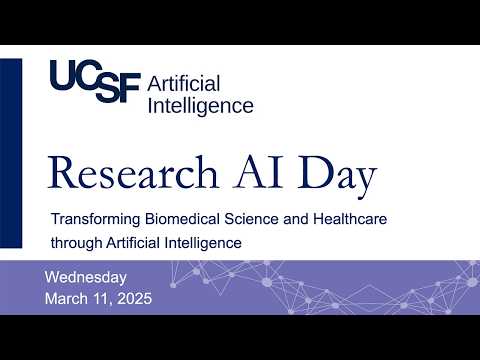
Resources
Useful links
GitHub repository
BaranziniLab/biorouterThe Baranzini Lab
baranzinilab.ucsf.eduBakar CHSI
Computational Health Sciences InstituteUCSF Academic Research Services
ars.ucsf.eduUCSF Versa
Institutional AI platformUCSF AI Research Day
ai.ucsf.edu/researchdayContributors
Acknowledgements
The Baranzini Lab baranzinilab.ucsf.edu ↗
Bakar Computational Health Science Institute (BCHSI) bakarinstitute.ucsf.edu ↗
UCSF Academic Research Services (ARS) ars.ucsf.edu ↗
Open source inspirations
Developer
About the developer
Wanjun Gu
Lead developer, Baranzini Lab, UCSF